The 10th IPPA World Congress on Positive Psychology arrives at a consequential moment. Rapid technological change, growing mental-health needs, social disconnection, geopolitical uncertainty, cultural transformation, and environmental pressures are reshaping how we live, learn, work, relate, heal, and pursue meaningful lives.
There could be no more fitting home for a congress on human flourishing than a city that has connected continents, cultures, and civilizations for centuries—a place where people, traditions, and ideas have long come together.
Inspired by this setting and guided by the Congress theme—“Where Cultures Meet, Humanity Flourishes”—the Scientific Committee has developed an open and forward-looking programme. Through ten interconnected scientific tracks and ten engaging programme formats, the Congress will bring diverse cultures, disciplines, methods, and forms of knowledge into conversation. Together, we will explore the questions and challenges shaping wellbeing today—and those that will continue to matter in the years ahead.
Our theme expresses both a conviction and an invitation. Flourishing is shaped by culture, community, history, place, and lived experience. When people with different perspectives meet in a spirit of curiosity and respect, they can deepen understanding, challenge assumptions, and inspire more humane and culturally responsive approaches to wellbeing.
The ten scientific tracks encompass culture, society, and the planet; artificial intelligence and digital technologies; close relationships and social connection; meaning, character, and spirituality; health, healing, and recovery; lifelong learning; the changing world of work; beauty, culture, and imagination; scientific rigour and responsibility; and emerging, cross-cultural, and underrepresented areas. Together, the tracks are designed to encourage connections across disciplines, cultures, methods, and forms of knowledge—and to create space for ideas that may not fit neatly within traditional boundaries.
Ten programme formats will offer an engaging, participatory, and action-oriented experience. Alongside traditional research presentations, the Congress will feature curated dialogues, critical reflection, practical demonstrations, and collaborative sessions bringing together researchers, practitioners, policymakers, community leaders, and people with lived experience.
We recognize that important work on these issues—and on wellbeing more broadly—is taking place across many disciplines and fields of practice. We invite contributions from within and beyond psychology and positive psychology, including from scholars, practitioners, and community partners whose work connects with the Congress themes.
We especially encourage students, early-career researchers, emerging practitioners, and contributors from underrepresented regions and communities to take part. Your perspectives, experiences, and ideas are essential to the conversation we hope to create.
With the generous support of our sponsors, Ibn Haldun University and Üsküdar University, we plan to offer at least 50 travel bursaries of up to US$1,000 each. These bursaries will support delegates from the Global South and students from any country whose submissions are selected for oral presentation through the blind review process. We hope this support will make it possible for a wider range of voices, experiences, and ideas to enrich the Congress.
We value rigorous research, innovative practice, critical perspectives, culturally grounded knowledge, and collaborative work that translates evidence into meaningful action. Whether your contribution strengthens established understanding, opens a new line of inquiry, connects insights across fields, or invites the field to think differently, it can help build a more open, connected, and responsible science of flourishing.
Join us to share what you know—and to question, listen, connect, and discover what becomes possible when cultures meet.
 Jane Gillham
 Denise Quinlan
 Matthew Iasiello
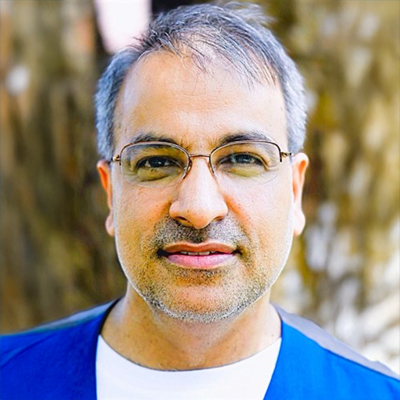 Tayyab Rashid
Rather than organizing the program around traditional research and practice domains, the 2027 World Congress has adopted ten interconnected scientific tracks. These tracks reflect emerging priorities, diverse perspectives, and the complex challenges shaping the future of flourishing.
The proposed scientific tracks for the 10th IPPA World Congress on Positive Psychology were developed through a structured review of contemporary scholarship, emerging research priorities, and developments in practice and public policy. The aim was to represent positive psychology’s established foundations while opening the Congress to the questions shaping the future of human flourishing
The development process included:
The publications informing this process were neither definitive nor exhaustive. They helped identify influential ideas, significant findings, unresolved debates, methodological limitations, and areas requiring greater scientific and practical attention.
The ten tracks offer interconnected perspectives on flourishing across disciplines, cultures, populations, institutions, and global challenges.
Each track is grounded in evidence while encouraging critical examination of uncertainty. Artificial intelligence may expand access to health and education, yet human–AI teams do not consistently outperform the stronger human or AI working alone; outcomes depend on the task, relative capabilities, and interaction design (Vaccaro et al., 2024). Social connection is associated with mental and physical health and longevity, but important questions remain about cultural variation and how loneliness can be reduced at scale (Holt-Lunstad, 2024). Positive psychology interventions show small-to-medium average benefits across well-being, quality of life, depression, anxiety, and stress, but these effects should not be assumed to apply equally across populations, conditions, and settings (Carr et al., 2024)
The global burden of suffering makes this critical perspective essential. In 2023, approximately 1.17 billion people were living with mental disorders, accounting for 17.3% of global years lived with disability and representing the leading cause of disability worldwide (GBD 2023 Mental Disorder Collaborators, 2026). Flourishing science must therefore ask not only how people can enhance well-being, but how its theories, practices, and policies can serve those who are distressed, languishing, displaced, excluded, or unable to access quality care. It must address suffering and structural disadvantage rather than locating responsibility solely within individuals.
Cross-cultural and Indigenous perspectives are central to this agenda. Participatory research involving approximately 40,000 people across 50 countries found both shared and culturally distinctive understandings of well-being. Relationships and health were widely valued, while dignity, civic participation, economic security, autonomy, leisure, and cultural connection varied across contexts (Sollis et al., 2024). African positive psychology research has expanded but remains concentrated in relatively few countries, underscoring the need for wider representation, regional collaboration, culturally relevant measures, and greater attention to social, economic, relational, and ecological conditions (Wilson Fadiji et al., 2024).
The tracks consequently invite scholarship grounded in Indigenous, African, Asian, Islamic, Latin American, Middle Eastern, Pacific, diasporic, and other underrepresented knowledge traditions. These perspectives are not cultural additions to an otherwise universal Western framework. They can challenge fundamental assumptions about the self, relationships, suffering, morality, spirituality, health, community, land, and the good life—and help produce more valid theories, measures, practices, and policies.
The tracks also invite disciplines not traditionally placed at the centre of positive psychology. Medicine, neuroscience, sociology, anthropology, economics, philosophy, theology, public health, education, organizational science, law, political science, architecture, urban planning, technology, environmental studies, Indigenous studies, and the arts each illuminate different conditions of flourishing. Their integration can support more effective responses to complex challenges facing people and the planet.
Critical inquiry is therefore integral to all ten tracks. Congress participants are invited to examine strong findings alongside null results, failed replications, cultural limitations, unintended harms, and unanswered questions. Positive psychology’s movement toward more relational, cultural, systemic, spiritual, ecological, and justice-oriented perspectives demonstrates its capacity to evolve (Arslan, 2025). Philosophical critiques nevertheless ask whether this expansion has sufficiently transformed its underlying assumptions about happiness, freedom, and a universal good life (Eytan, 2025).
The ten tracks are therefore more than a structure for organizing presentations. They invite participants to share what we know, acknowledge what we do not know, question what has been taken for granted, and build a more rigorous, culturally responsive, effective, and applicable science of flourishing. By connecting scientific evidence with lived experience, Indigenous and community knowledge, multidisciplinary collaboration, and responsible innovation, the Congress seeks better solutions for individuals, relationships, communities, institutions, societies, future generations, and the planet.
Drawing on psychology, computer science, education, healthcare, organizational science, human-centred design, and other disciplines, this track invites submissions examining the relationships between artificial intelligence, digital technologies, and human flourishing.
We welcome theoretical, empirical, applied, and methodological contributions addressing a broad range of technologies, contexts, populations, and perspectives. Submissions may explore potential benefits, limitations, risks, and unintended consequences at individual, relational, organizational, community, or societal levels.
Interdisciplinary, participatory, and culturally responsive approaches are encouraged. The track welcomes diverse perspectives on whether, when, and how technology relates to human wellbeing and flourishing, allowing priorities and conclusions to emerge from the submissions received. Together, these themes raise a range of emerging questions about how digital technologies can contribute to—or complicate—human flourishing. The following questions are illustrative rather than exhaustive. Submissions addressing other relevant questions and perspectives are warmly welcomed.
How do AI and digital technologies support or hinder human flourishing across different people, cultures, contexts, and stages of life?
When does human–technology collaboration strengthen human capability, and when might it introduce harm, dependence, exclusion, or loss of agency?
How can digital technologies be designed and used in ways that are safe, accessible, equitable, culturally responsive, and locally relevant?
How might the benefits, risks, and broader human, societal, and environmental effects of digital technologies be understood and evaluated?
How can the digital divide, particularly across the Global South, be reduced through affordable and locally relevant technologies?
This track invites submissions exploring how cultures, communities, institutions, public systems, and environmental conditions relate to individual, collective, and planetary flourishing. Relevant contexts may include trust, belonging, cultural traditions, economic security, governance, public services, justice, peace, and environmental wellbeing.
The track welcomes diverse understandings of flourishing and suffering across cultures, countries, communities, and traditions. Submissions may examine how social, economic, political, historical, and environmental conditions support or constrain wellbeing, as well as different pathways through which people and communities respond to suffering, exclusion, inequality, insecurity, and environmental change.
We welcome theoretical, empirical, applied, and methodological contributions from a broad range of scholarly, practical, cultural, geographic, and interdisciplinary perspectives. Comparative, participatory, longitudinal, culturally grounded, and policy focused approaches are welcome, alongside other relevant approaches. Together, these themes raise a range of emerging questions about how cultural, institutional, societal, and environmental conditions can contribute to—or constrain—individual, collective, and planetary flourishing.
How is flourishing understood, experienced, and assessed across different cultures, communities, and traditions?
How do social, economic, political, historical, and environmental conditions relate to flourishing, suffering, and inequality?
What supports trust, belonging, cooperation, and flourishing across differences, and how are these affected by division or polarization?
How can research and diverse forms of knowledge inform public policies and services while remaining culturally responsive, democratic, and attentive to differing views of the good life?
How might communities and societies respond to injustice, conflict, displacement, and environmental challenges while supporting individual, collective, and planetary flourishing?
Drawing on psychology, developmental science, sociology, communication studies, and other disciplines, this track invites submissions exploring how close relationships, social connection, and prosocial behaviour relate to flourishing across the lifespan.
Relevant contexts may include romantic partnerships, friendships, families, caregiving and intergenerational relationships, neighbours, volunteering, and other forms of connection. Submissions may consider attachment, intimacy, communication, trust, belonging, reciprocity, conflict, loneliness, social isolation, mutual support, and changing relationships across life transitions.
We welcome theoretical, empirical, applied, and methodological contributions representing diverse relationships, family structures, communities, cultures, and traditions. Submissions may examine both the benefits and complexities of relationships, including questions of power, consent, dependency, exclusion, obligation, dignity, and healthy boundaries. These areas of inquiry invite further consideration of when and how relationships, social connections, and prosocial behaviours nurture flourishing—and when they may create challenges or cause harm.
How do intimate partnerships, families, caregiving relationships, and intergenerational ties relate to flourishing across life stages and cultural contexts?
How do friendships, neighbourhood connections, volunteering, and informal support contribute to belonging and respond to loneliness or social isolation?
How do empathy, compassion, trust, reciprocity, generosity, and cooperation develop and operate within relationships and communities?
How are intimacy, connection, caregiving, and social responsibility understood across different cultures, traditions, identities, and family structures?
When do relationships and prosocial obligations support flourishing, and when might power imbalances, coercion, dependency, exclusion, or harmful expectations undermine it?
Drawing on psychology, philosophy, theology, religious studies, and other disciplines, this track invites submissions exploring how people and communities understand and pursue meaning, purpose, character, wisdom, and spiritual flourishing.
Relevant areas may include calling, coherence, significance, identity, hope, practical judgment, character strengths, virtues, spirituality, religion, faith, transcendence, moral development, and existential wellbeing. Submissions may also examine grief, mortality, loss, moral injury, spiritual struggle, demoralization, and the reconstruction of meaning during major life transitions.
We welcome theoretical, empirical, applied, and methodological contributions representing religious, spiritual, philosophical, Indigenous, cultural, and secular perspectives. Submissions may explore both the potential contributions and complexities of meaning, character, religion, and spirituality, including questions of context, pluralism, coercion, consent, cultural humility, and freedom of belief or nonbelief. These themes open important questions about how people and communities cultivate meaning, character, wisdom, and spiritual flourishing while navigating diverse beliefs, profound challenges, and changing circumstances.
The following questions are illustrative rather than exhaustive. Submissions addressing other relevant questions and perspectives are warmly welcomed.
How do people develop, sustain, or reconstruct meaning and purpose across the lifespan, particularly during adversity, loss, or major transitions?
How are character strengths and virtues understood, expressed, and cultivated across different circumstances and cultural contexts?
What constitutes wisdom in different traditions, and how might wise judgment develop through education, reflection, dialogue, relationships, and lived experience?
When do religion, spirituality, ritual, transcendence, and sacred experience support flourishing, and when might they contribute to distress, exclusion, coercion, or harm?
How might meaning-centred, strengths-based, wisdom-informed, or spiritually integrated practices be studied and applied ethically across diverse beliefs, cultures, and settings?
Drawing on clinical psychology, medicine, nursing, public health, and other disciplines, this track invites submissions exploring health, healing, recovery, resilience, and whole person flourishing.
Relevant areas may include physical and psychological wellbeing, relationships, purpose, hope, dignity, spirituality, quality of life, prevention, mental health, chronic illness and pain, disability, caregiving, rehabilitation, palliative care, digital health, and community health. Submissions may examine experiences of suffering, trauma, distress, and languishing alongside the personal, relational, clinical, community, and structural conditions associated with healing and recovery.
We welcome theoretical, empirical, applied, and methodological contributions representing diverse health conditions, professions, communities, cultures, and healing traditions. Submissions may explore how strengths-based and positive psychological approaches complement established medical, psychological, rehabilitative, community-based, and palliative care approaches. Questions concerning access, safety, evidence, ethics, cultural responsiveness, professional competence, and unintended effects are also welcome. These areas of inquiry prompt further questions about how whole-person approaches can advance health, healing, and recovery while responding thoughtfully to diverse needs, contexts, and traditions.
How can whole-person health, healing, and recovery be understood and assessed across cultures, life stages, communities, and health conditions?
When do strengths-based and positive psychological approaches support healing and recovery, and when might they minimize suffering, create additional burdens, or delay appropriate care?
How do family, community, economic, educational, environmental, and structural conditions shape mental and physical health, access to care, and opportunities for recovery?
How can people flourish while living with mental illness, chronic illness, disability, pain, caregiving responsibilities, or life-limiting conditions?
How might clinical, rehabilitative, digital, spiritual, cultural, and community approaches be integrated while attending to safety, privacy, equity, informed consent, professional judgment, and human connection?
Drawing on educational psychology, developmental science, learning sciences, sociology, and other disciplines, this track invites submissions exploring how learning and education relate to flourishing across schools, higher education, workplaces, adulthood, and later life.
Relevant areas may include wellbeing, belonging, resilience, motivation, agency, creativity, purpose, academic development, positive education, social and emotional learning, culturally responsive teaching, educator wellbeing, lifelong learning, and whole-system change. Submissions may also examine bullying, exclusion, unequal access to education, digital wellbeing, healthy technology use, and the implications of artificial intelligence for learning.
We welcome theoretical, empirical, applied, and methodological contributions representing diverse learners, educators, institutions, communities, cultures, and educational traditions. Cross-cultural, Indigenous, Global South, participatory, longitudinal, and policy-focused approaches are encouraged. Submissions may consider how education can reduce rather than reproduce inequalities and how sustainable change can address institutional conditions, leadership, resources, and professional agency alongside individual development. These areas invite deeper consideration of how learning environments, practices, and systems can foster lifelong flourishing while responding to inequality, technological change, and the diverse needs of learners and educators.
Drawing on organizational psychology, management, leadership studies, occupational health, and other disciplines, this track invites submissions exploring how work and organizations contribute to—or undermine—human flourishing.
Relevant areas may include job design, leadership, organizational culture, workplace relationships, employment conditions, recognition, mattering, inclusion, agency, engagement, job crafting, psychological safety, belonging, ethical leadership, healthy work–life boundaries, and organizational virtuousness. Submissions may also examine burnout, discrimination, precarious employment, surveillance, work intensification, unemployment, and threats to autonomy and dignity, with particular attention to hybrid, remote, automated, platform-based, and AI-supported work.
We welcome theoretical, empirical, applied, and methodological contributions representing diverse workers, occupations, organizations, employment arrangements, cultures, and economic contexts. Submissions may examine how leadership, work design, employment protections, technology governance, and organizational systems can advance dignity, capability, connection, equity, and sustainable performance. Employee wellbeing is understood as an organizational and societal responsibility—not solely as an individual capacity to cope with harmful conditions. These themes call for closer examination of how workplaces can sustain both human flourishing and organizational performance amid changing social, economic, and technological conditions.
The following questions are illustrative rather than exhaustive. Submissions addressing other relevant questions and perspectives are warmly welcomed.
How can work be designed to support vitality, learning, engagement, dignity, and sustainable performance across diverse roles and employment contexts?
When do workplace wellbeing interventions create lasting change, and when might they distract from harmful working conditions?
How do leadership, workplace relationships, recognition, belonging, and mattering shape employee mental health and performance?
Which organizational practices and policies can most effectively prevent burnout, discrimination, exploitation, precarity, and work intensification?
When does human–AI collaboration improve job quality, and when might it create surveillance, deskilling, displacement, or loss of autonomy?
Drawing on the arts and humanities, positive psychology, creativity studies, cultural studies, and other disciplines, this track invites submissions exploring how beauty, culture, and imagination contribute to individual and collective flourishing. Literature, philosophy, history, music, visual art, theatre, dance, architecture, storytelling, and other forms of cultural expression can help people interpret experience, examine what matters, imagine alternatives, and participate in cultural life.
Relevant areas may include beauty, imagination, curiosity, creativity, awe, play, humour, narrative, aesthetic experience, artistic creation, and cultural participation. Submissions may examine how the arts foster reflection, insight, identity, connection, learning, purpose, resilience, and community healing. They may also consider how artistic experiences evoke ambiguity, grief, moral reflection, productive discomfort, and social critique rather than pleasure alone.
We welcome theoretical, empirical, applied, historical, philosophical, participatory, creative, and methodological contributions representing diverse cultural, artistic, and intellectual traditions. Culturally grounded, historically informed, Indigenous, and Global South perspectives are particularly encouraged. Submissions may also address unequal access to arts education, museums, cultural institutions, public spaces, healthcare programmes, creative technologies, funding, and cultural participation. Together, these perspectives invite further exploration of how aesthetic and cultural experiences enrich human life while raising important questions about interpretation, access, ownership, and whose traditions and forms of expression are valued.
How do beauty, creativity, imagination, and cultural participation contribute to individual and collective flourishing?
How can literature, history, philosophy, storytelling, and the arts deepen understanding of suffering, identity, and the good life?
When do aesthetic experiences—including challenging or unsettling works—create insight, growth, perspective change, or new meaning, and when might they cause harm?
How can artistic creation and arts-based interventions support health, learning, connection, resilience, and community healing?
How do cultural diversity, unequal access, and emerging technologies reshape ideas of beauty, authorship, ownership, participation, and artistic value?
Drawing on psychology, philosophy, measurement science, cultural studies, and other disciplines, this track invites submissions that question assumptions and contribute to a more credible, inclusive, and responsible science of flourishing. It welcomes work advancing conceptual clarity, theory development, measurement, research design, causal inference, replication, evidence synthesis, implementation, longitudinal inquiry, open science, and responsible translation.
Relevant concerns may include construct proliferation, unclear terminology, weak or fragmented theory, overreliance on self-report and cross-sectional designs, underpowered studies, publication bias, limited replication, exaggerated causal or practical claims, and insufficient attention to boundary conditions or unintended harms. Submissions may also examine cultural narrowness, unrepresentative samples, individualism, structural neglect, universalized assumptions about the good life, commercialization, and the risk that flourishing interventions place responsibility on individuals while overlooking social, political, economic, historical, and ecological conditions.
We welcome theoretical, empirical, philosophical, critical, and methodological contributions representing diverse cultures, knowledge systems, and disciplinary traditions. Competing theories, null findings, failed replications, methodological innovations, Indigenous and culturally grounded knowledge, regenerative approaches, and research examining when flourishing practices help, fail, exclude, burden, or cause harm are encouraged. These priorities invite rigorous debate about what flourishing means, how it can be studied credibly, whose knowledge and values shape the field, and what responsibilities accompany the translation of research into policy and practice.
What is flourishing, and how can research distinguish its causes, components, indicators, correlates, and consequences?
Which findings are causal, replicable, practically significant, and generalizable—and what evidence should be required before claims are translated into interventions or public policy?
Does positive psychology have sufficiently coherent theories of human nature, suffering, freedom, morality, relationships, culture, institutions, and the good life?
Whose knowledge and values define flourishing, and how should Indigenous, Global South, non-Western, and other culturally grounded perspectives reshape its theories, measures, and methods?
How can flourishing science address structural inequality, ecological limits, commercialization, and potential harms while maintaining conceptual precision and methodological rigour?
Drawing across disciplines, cultures, knowledge systems, and the themes represented in Tracks 1–9, this open, future-facing track invites submissions on emerging topics, overlooked populations and regions, and new approaches that challenge, complement, or extend established flourishing science.
Particular attention is given to research from underrepresented regions of the Global South and to Indigenous-led and community-partnered scholarship. Submissions may explore cultural, religious, spiritual, secular, and Indigenous understandings of flourishing without treating Western concepts or measures as universal. Relevant areas may also include gender and sexual diversity, disability and neurodiversity, rural and remote life, migration and displacement, conflict and peace, law and human rights, sport and play, architecture and public space, financial life, changing families, human–animal relationships, and planetary wellbeing.
We welcome empirical, theoretical, qualitative, participatory, Indigenous-led, philosophical, creative, policy-oriented, and practice-based contributions. Submissions should explain their relevance to flourishing, their distinctive contribution, and how they connect with or extend other Congress tracks. Emerging claims should distinguish evidence from hypothesis and acknowledge uncertainty and potential harms. Submissions may be programmed jointly as cross-track sessions, symposia, panels, or keynotes, and presenters from underrepresented regions will receive priority consideration for available Congress travel bursaries. By opening space for neglected perspectives and new collaborations, this track asks how flourishing science can become more inclusive, culturally grounded, intellectually expansive, and responsive to emerging global realities.
The following questions are illustrative rather than exhaustive. Submissions addressing other relevant questions and perspectives are warmly welcomed.
Which cultures, regions, populations, experiences, and ways of knowing remain underrepresented in flourishing science?
What can cross-cultural research reveal about shared and culturally distinctive forms of flourishing without imposing Western assumptions or reproducing colonial hierarchies?
How can Indigenous communities lead research grounded in their languages, lands, relationships, priorities, and ways of knowing?
How do religion, spirituality, gender, sexuality, disability, neurodiversity, migration, displacement, and conflict challenge conventional understandings of flourishing?
Which emerging ideas, methods, disciplines, and cross-track collaborations could reshape flourishing science for communities, ecosystems, future generations, and a changing world?
Ten Signature Programs are available for submission within any of the ten scientific tracks.
| Program | Primary Purpose | Format |
|---|---|---|
| 1. Innovative Practice Workshops and Demonstrations | Provide practical experience with evidence-informed approaches that participants can examine and adapt. | 60-minute interactive workshop or live demonstration. |
| 2. Wellbeing Intervention Showcase | Demonstrate a focused intervention addressing a clearly defined everyday wellbeing problem. | 10-minute presentation or practical demonstration, with an optional audience-rated competition. |
| 3. Science Meets Practice Panels | Connect flourishing research with practice, policy, organizations, education, communities, and lived experience. | 60-minute moderated panel with facilitated discussion and audience participation. |
| 4. Focused Flourishing Symposium | Integrate complementary research, practice, cultural knowledge, or emerging perspectives around one focused topic. | 60-minute symposium with three or four presentations, moderated discussion, and audience questions. |
| 5. Stories and Case Studies Worth Sharing | Share ethically presented lived experiences and cases that generate meaningful insights about flourishing. | Curated live or prerecorded presentations of approximately 8–10 minutes. |
| 6. Flourishing on Film | Communicate research, practice, culture, community knowledge, and lived experience through visual storytelling. | Prerecorded visual or documentary presentation of 8–10 minutes; exceptional works may extend to 15 minutes. |
| 7. Early Career Investigator Competition | Recognize original flourishing research led by investigators within seven years of completing their doctorate. | Preliminary scientific review followed by 15-minute live finalist presentations and questions. |
| 8. Student Research Competition | Support undergraduate, graduate, and postdoctoral researchers presenting original flourishing research. | Abstract review followed by 15-minute live finalist presentations and questions. |
| 9. Poster Presentations | Share research, practice, interventions, conceptual work, and emerging findings through accessible visual presentation. | Printed poster, brief two- to three-minute overview, and discussion during a facilitated session. |
| 10. Global Challenges and Multidisciplinary Solutions | Develop actionable, culturally responsive responses to major challenges affecting human and planetary flourishing. | Multidisciplinary team proposal followed by a 40–50-minute Congress session and Global Solutions Action Brief. |
 Presenting Sponsor
 Premier Sponsor